


Land acquisition in India has always been a challenging, time-consuming, and often unpredictable process. Despite ongoing digitization efforts, one fundamental issue continues to persist — fragmented land records and region-specific complexity in understanding land data.
For industries, infrastructure developers, and government agencies, this fragmentation leads to delays, risks, and significant financial implications.
The Core Problem: Fragmented Land Records
India’s land data ecosystem is not unified. Instead, it is scattered across multiple systems, formats, and authorities:
- Cadastral maps stored separately from textual records
- Ownership details maintained at local tehsil or district levels
- Variations in land record formats across states
- Inconsistent digitization quality across regions
This results in a situation where no single source provides a complete and reliable picture of land ownership, usage, and legal status.
Regional Complexity Adds Another Layer
Each state in India follows its own land governance framework:
- Terminologies differ (Khata, Patta, Jamabandi, RoR, etc.)
- Record access ranges from digital portals to manual registers
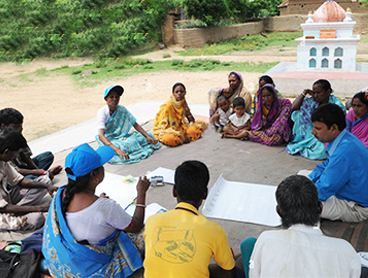
- Language and legacy documentation create interpretation challenges
Even experienced professionals often struggle to decode and validate land information across regions.
Impact on Land Acquisition Projects
These challenges directly affect execution:
- Delays in land due diligence
- Increased legal risks due to unclear ownership
- Difficulty in identifying contiguous land parcels
- Limited transparency in decision-making
For large-scale projects, this often translates into months — or even years — of delay.
How OxLand Solves This Problem
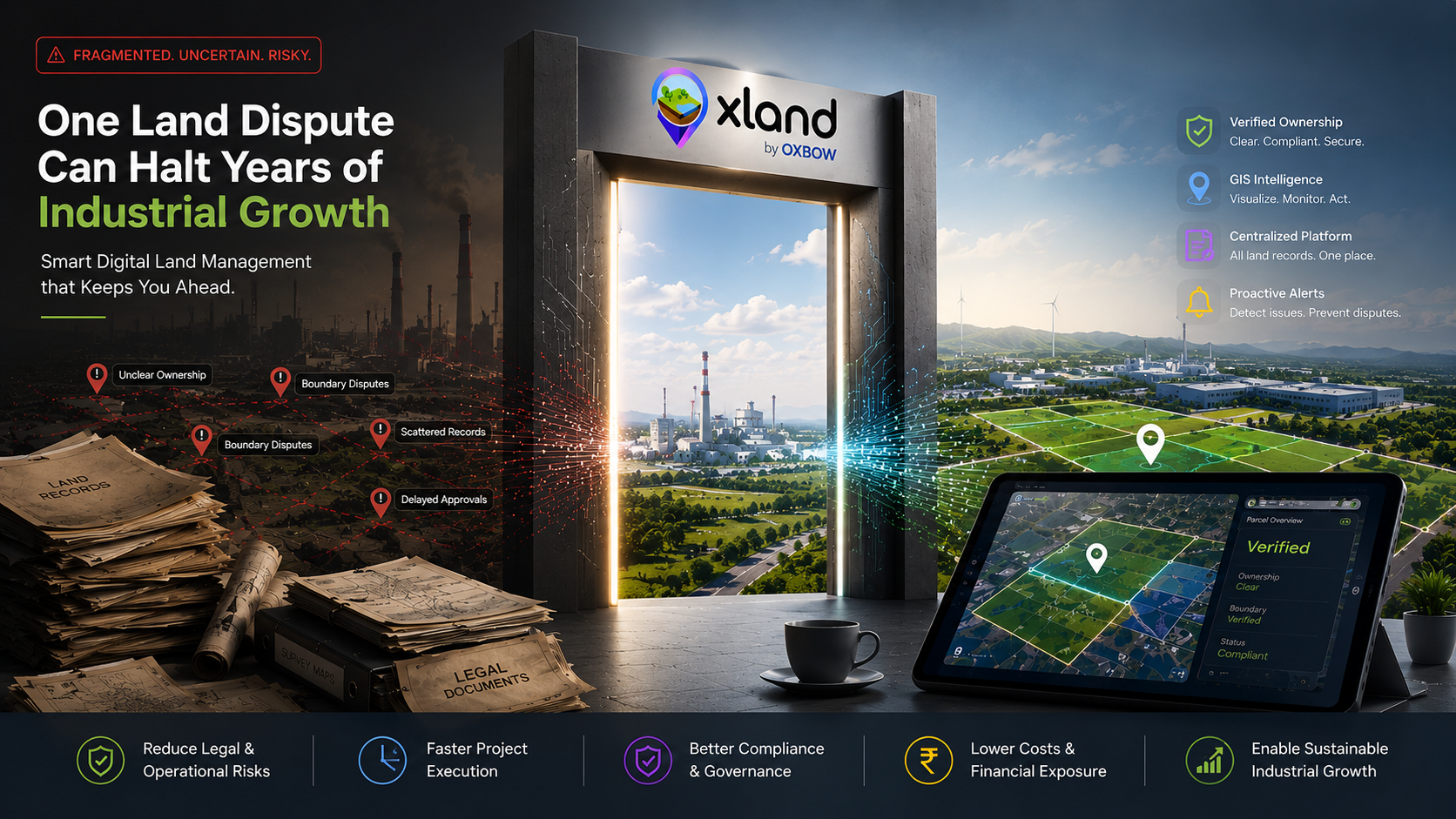
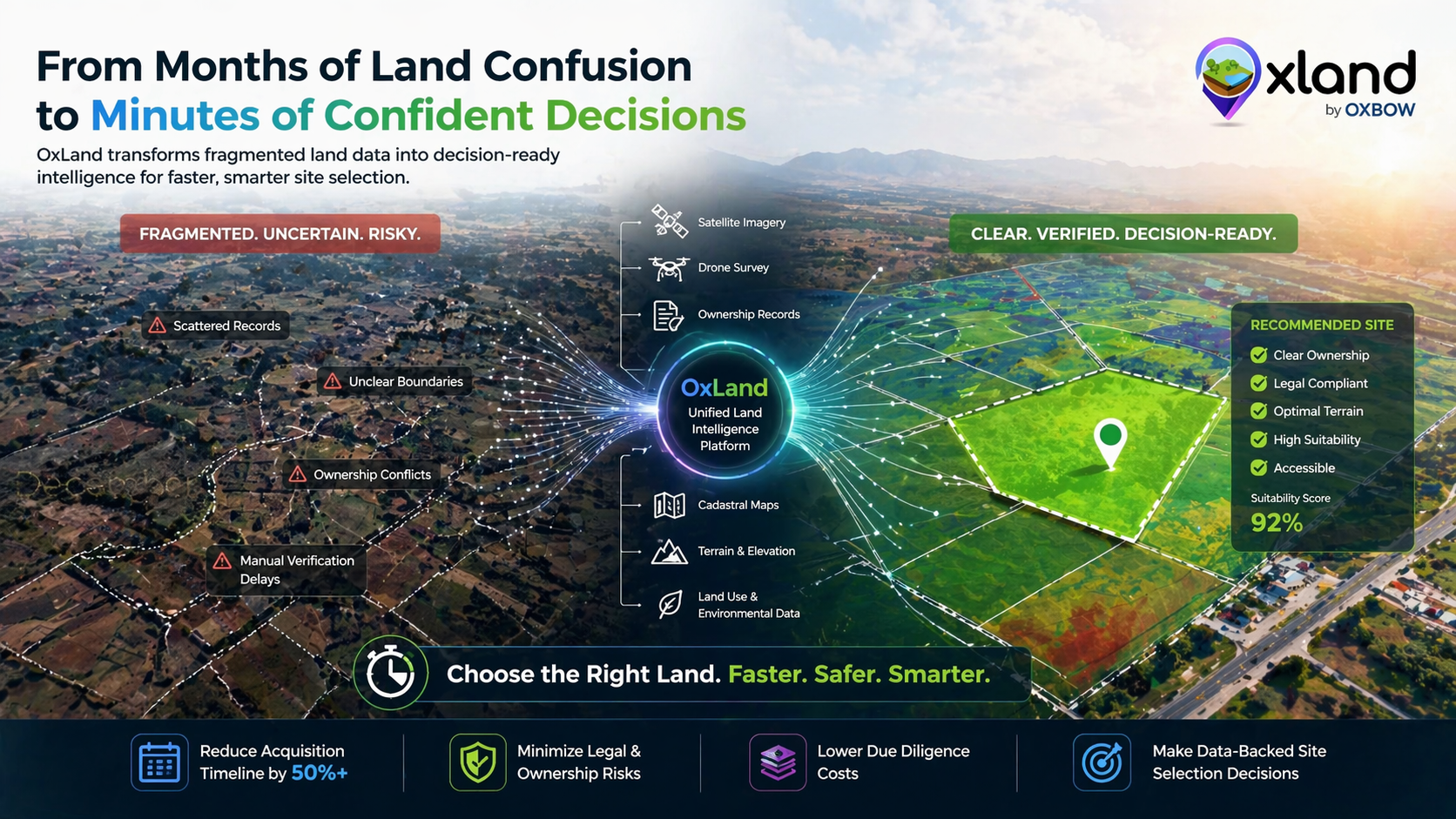
OxLand by Oxbow Intellect is designed to address these exact challenges by transforming fragmented data into structured, usable insights.
1. Unified Land Data Platform
- Cadastral maps
- Ownership records
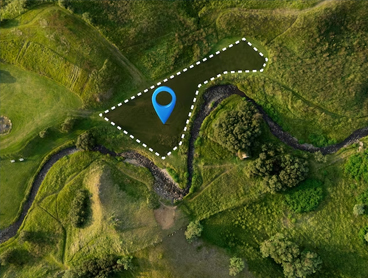
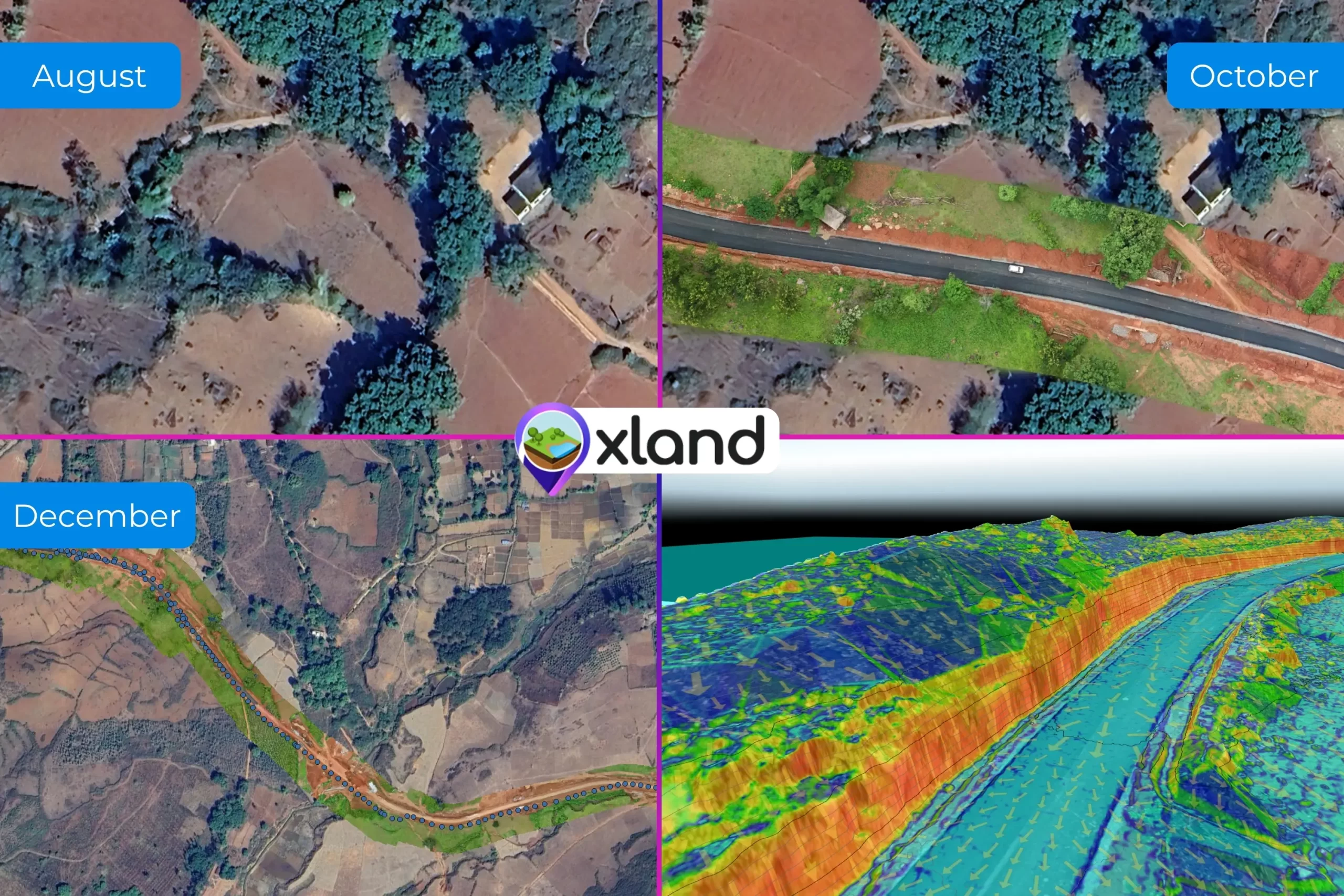
- Satellite and drone imagery
- GIS layers
This provides a 360-degree view of land parcels, all in one place.
2. Simplified Understanding Across Regions
- Interpret land documents across states
- Compare land parcels across geographies
- Reduce dependency on local intermediaries
3. GIS & Geo-AI Driven Insights
- Identify suitable land parcels
- Analyze terrain and land use
- Make faster, data-backed decisions
4. Faster Due Diligence & Reduced Risk
- Reduce manual verification efforts
- Improve ownership clarity
- Accelerate acquisition timelines
The Future of Land Acquisition is Intelligent
As India continues to grow, the need for transparent, efficient, and data-driven land acquisition is becoming critical.
OxLand is not just digitizing land records — it is making land data understandable, actionable, and decision-ready.
Conclusion
Land acquisition in India doesn’t have to be slow, opaque, and risky.
With OxLand, organizations can move from fragmentation to clarity, from manual processes to intelligent systems, and from delays to decisive execution.